Metabolic Bone Disease in Bearded Dragons: Signs, Causes and Prevention
Reptiles6 min read
By the Happy Paws & Claws team
Metabolic bone disease, often called MBD, is one of the most common health problems we see in pet bearded dragons. The good news is that it is largely preventable, and when it is caught early, many dragons can improve with the right care. This guide explains what MBD is, the signs to watch for and how to help keep your dragon's bones strong.
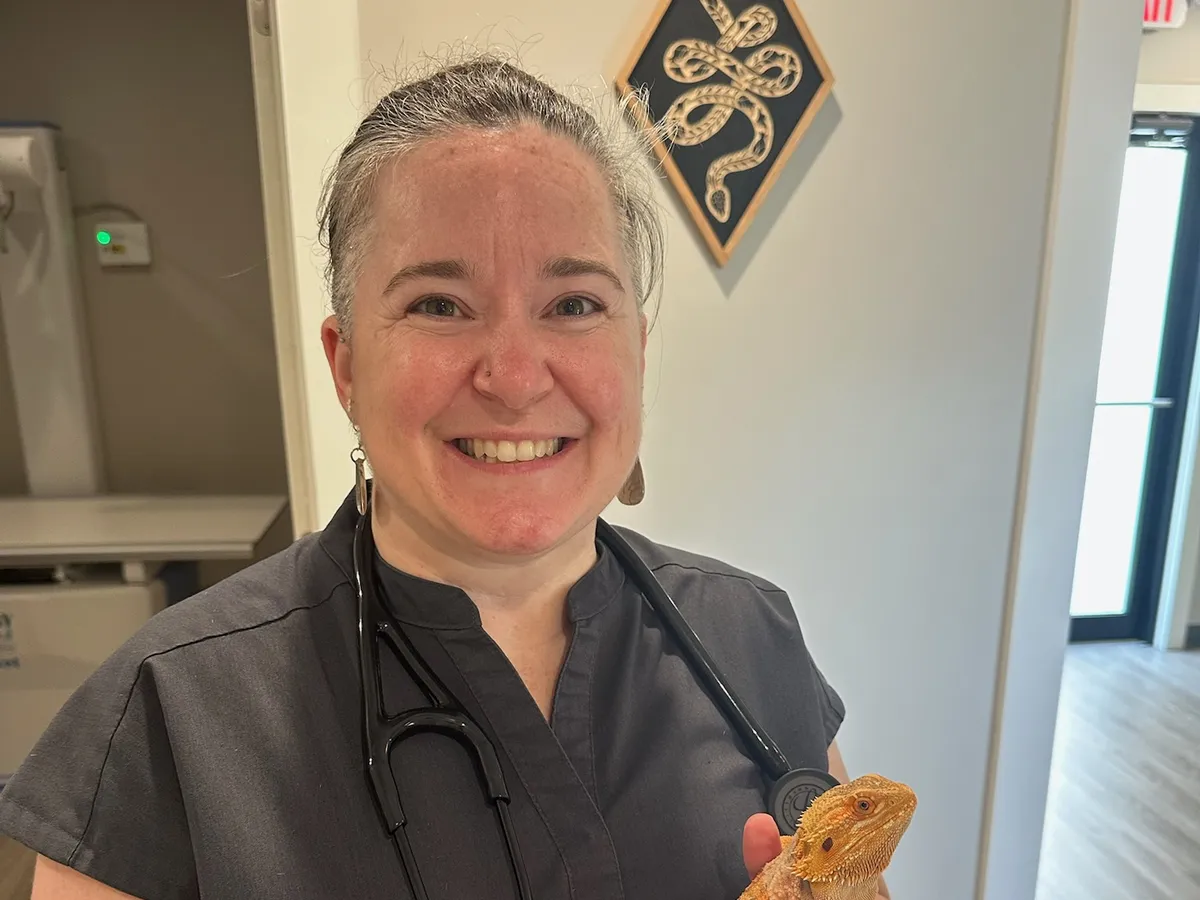
Our owner, Dr. Angela Melton, keeps a bearded dragon herself and trained at the Fort Worth Zoo and the Australia Reptile Park, so the questions in this guide are ones she knows from both sides of the exam table.
What Is Metabolic Bone Disease?
Metabolic bone disease is a problem with how the body uses calcium. Bearded dragons need calcium for strong bones, healthy muscles and nerves. When they do not get enough usable calcium, the body starts pulling calcium out of the bones. Over time, the bones become soft, weak and easy to break.
Young, fast-growing dragons are especially at risk, because they need a lot of calcium to build their skeleton, but MBD can happen at any age.
What Causes MBD in Bearded Dragons?
MBD is almost always linked to the dragon's setup and diet. Common causes include:
- Not enough UVB light. Bearded dragons need UVB light to make vitamin D3, and they need vitamin D3 to absorb calcium. Without good UVB, even a calcium-rich diet may not be enough.
- An old UVB bulb. UVB bulbs can stop giving off useful UVB long before they stop glowing. A light that still looks bright may not be doing its job.
- Glass or plastic between the bulb and the dragon. Many materials filter out UVB.
- Not enough calcium in the diet, such as skipping calcium dusting on feeder insects.
- Too much phosphorus compared to calcium, from a diet that leans too heavily on certain insects or foods.
- Basking temperatures that are too low, which can affect digestion and overall health.
Signs of Metabolic Bone Disease
Early signs can be subtle. Call a reptile vet if you notice:
- A soft, rubbery or swollen lower jaw
- Swollen legs or lumps along the legs or spine
- Trembling, twitching or jerky movements, especially in the toes or legs
- Weakness, trouble lifting the body off the ground, or dragging the back legs
- Bowed legs or a curved spine or tail
- Not eating or eating less, and low energy
- Broken bones from minor bumps or falls
Severe MBD can cause seizures or make a dragon unable to move. If your dragon is having seizures or cannot stand, treat it as urgent and call a vet right away.
How a Vet Diagnoses MBD
Diagnosis starts with a hands-on exam and a detailed conversation about your dragon's enclosure, lighting, temperatures and diet. Bring photos of the setup and the brand and age of the UVB bulb if you can.
The veterinarian may recommend X-rays to look at bone density and check for fractures, and sometimes lab work. At our clinic, an exotic pet exam is $72, and X-rays are $194.04 to $302.20. We only recommend tests your dragon needs, and we go over the costs with you first.
How MBD Is Treated
Treatment depends on how severe the disease is, and it should be guided by a veterinarian. It often includes correcting the UVB lighting, temperatures and diet, along with calcium and other support the vet prescribes. Dragons with fractures or severe weakness may need extra care and handling changes while they heal.
Please do not try to treat suspected MBD with extra supplements on your own. Too much of some supplements can cause problems of its own, so the right plan depends on a proper exam.
Bones that have already changed shape may not fully straighten, but many dragons can still live comfortable lives once the cause is fixed.
How to Help Prevent MBD
Prevention comes down to a good setup and a balanced diet:
- Use a quality UVB light made for desert reptiles, and replace it on the schedule the maker recommends, even if it still lights up.
- Make sure nothing between the UVB bulb and your dragon is blocking UVB.
- Give a proper basking area and a temperature range across the enclosure. Use a thermometer, not a guess.
- Dust feeder insects with a calcium supplement as your vet recommends.
- Feed a varied diet of appropriate insects and leafy greens for your dragon's age.
- Schedule a yearly wellness exam so problems are caught early.
See a Reptile Vet near Dayton
Happy Paws & Claws in Englewood cares for bearded dragons, leopard geckos, ball pythons and other reptiles from across the Dayton area. Learn more about our reptile vet care, call 937-595-0660 or request an appointment.
This article is general information and is not a substitute for an exam. If you think your bearded dragon is sick, please see a veterinarian.
Frequently asked questions
Related services
Have a question about your pet? Call 937-595-0660 or request an appointment