Rabbit Spay and Neuter: Cost, Benefits and What to Expect
Small Mammals7 min read
By the Happy Paws & Claws team
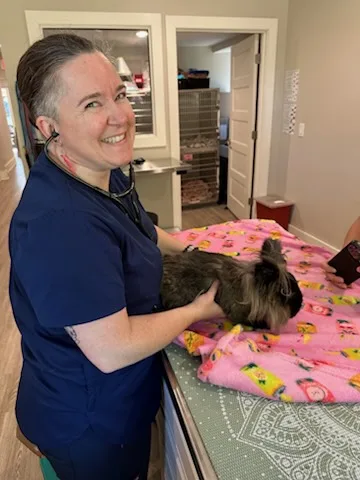
Spaying or neutering a rabbit is one of the best things you can do for their long-term health, but many rabbit owners are not sure where to start. Not every clinic sees rabbits, prices are hard to find, and rabbits have different needs than cats and dogs. This guide shares the real prices at Happy Paws & Claws in Englewood, Ohio, explains why spaying and neutering matter so much for rabbits, and covers what to expect before and after surgery.
Quick answer: At Happy Paws & Claws, a rabbit spay costs $307.90 to $348.24 and a rabbit neuter costs $258.29 to $298.63. Both include a surgical laser, an IV catheter, licensed nurse monitoring, post-op therapy laser, an ear cleaning and a nail trim.
Rabbit Spay and Neuter Prices
These are our current prices:
- Rabbit spay (female): $307.90 to $348.24
- Rabbit neuter (male): $258.29 to $298.63
A spay costs more than a neuter because it is a bigger surgery. The veterinarian enters the abdomen to remove the ovaries and uterus. A neuter removes the testicles and is a shorter procedure. Your exact price is confirmed with you before surgery, and current prices are always on our pricing page. Spay and neuter for other exotic species is priced after a consultation.
What Is Included in the Price
Rabbits are sensitive to stress and anesthesia, so the care around the surgery matters just as much as the surgery itself. Every rabbit spay and neuter at our clinic includes:
- Surgical laser
- IV catheter
- Monitoring by a licensed nurse throughout the procedure, including EKG, blood oxygen (SpO2), blood pressure, carbon dioxide (ETCO2), heart rate, breathing rate and temperature
- Post-op therapy laser
- Ear cleaning and nail trim while your rabbit is already relaxed
Optional add-ons include a microchip placed during surgery ($31.50), pre-op bloodwork for pets under 7 years ($112.31) and calming medication ($15 to $45). Our team will talk with you about which ones make sense for your rabbit.
Why Spay a Female Rabbit?
The biggest reason is cancer prevention. Female rabbits that are not spayed have a very high risk of reproductive cancer, especially uterine cancer, as they get older. The House Rabbit Society reports that intact female rabbits have a risk of up to 85% of developing reproductive cancers, and that uterine changes can show up as early as 18 months of age. Spaying removes that risk.
Spaying also helps with:
- Behavior. Unspayed females can be territorial, may growl, lunge or bite, and often dig or chew more.
- Litter habits. Spayed rabbits are usually much easier to litter train.
- False pregnancies, which can cause nest building, fur pulling and stress.
- Unplanned litters. Rabbits can get pregnant again very soon after giving birth.
Why Neuter a Male Rabbit?
Neutering a male rabbit helps with:
- Spraying and marking. Intact males often spray urine and leave droppings around to mark territory.
- Aggression and mounting, toward people and other pets.
- Bonding. Rabbits are social animals, and neutered rabbits are much easier to pair with a companion.
- Preventing litters if there is a female in the home.
When Should a Rabbit Be Spayed or Neutered?
The House Rabbit Society notes that females can usually be spayed at around 4 to 6 months of age, and males can be neutered once the testicles have descended, which can be as early as 10 to 12 weeks. The right timing depends on your rabbit's size, breed and health, so our veterinarian will make a recommendation at an exam.
Adult rabbits can be spayed or neutered too. If your rabbit is older or has a health issue, we will check them over first and may recommend bloodwork before anesthesia.
Is Anesthesia Safe for Rabbits?
Many rabbit owners worry about anesthesia, and it is a fair question. Rabbits hide illness well and react strongly to stress, so they do best with a team that knows rabbits. That is why careful handling, an IV catheter and a licensed nurse watching your rabbit's vital signs for the whole procedure are part of every rabbit surgery at our clinic.
A healthy rabbit and a careful plan make a big difference. Our owner, Dr. Angela Melton, trained at the Fort Worth Zoo and the Australia Reptile Park, and our team cares for rabbits, guinea pigs, ferrets and other small mammals alongside dogs and cats.
Getting Your Rabbit Ready for Surgery
Rabbits are prepared for surgery differently than cats and dogs, so please follow the instructions our team gives you rather than general advice online. In general, plan to:
- Bring your rabbit in a secure carrier with a towel and some of their usual hay
- Bring a small amount of their usual greens or pellets so they have familiar food after surgery
- Let us know about any recent changes in appetite, droppings or energy
- Set up a clean, quiet recovery space at home
Recovery at Home
Our team will let you know when your rabbit is ready to go home and what to watch for. The most important thing to watch after surgery is eating and pooping. Rabbits need to keep food moving through their gut, and a rabbit who stops eating can quickly develop a dangerous slowdown called GI stasis.
During recovery:
- Offer plenty of fresh hay, water and their usual greens
- Watch that your rabbit starts eating and producing droppings soon after coming home
- Keep the recovery space clean and dry, and use soft bedding
- Limit jumping and rough play until the incision heals
- Check the incision every day
- Keep a neutered male away from unspayed females for several weeks, because males can stay fertile for a while after surgery
Call us right away if your rabbit is not eating or pooping, seems hunched or very quiet, grinds their teeth, or if the incision looks swollen, red or open. In rabbits, not eating is always urgent.
Paying for Your Rabbit's Surgery
We publish our prices so you can plan ahead, and we accept CareCredit financing. If you have questions about the cost for your rabbit, call us at 937-595-0660.
Rabbit Vet Care near Dayton
Happy Paws & Claws at 55 Hillside Ct., Englewood, OH 45322 cares for rabbits, guinea pigs, ferrets and other small mammals from across the Dayton area. Learn more about our rabbit, guinea pig and ferret care and exotic pet care, read about surgery at our clinic, or call 937-595-0660 to request an appointment.
This article is general information and is not a substitute for an exam. Please talk with a veterinarian about your rabbit's needs.
Frequently asked questions
Related services
Have a question about your pet? Call 937-595-0660 or request an appointment